
In today’s landscape of health and social care in England, local authorities face mounting pressure to not only comply with regulations but also to enhance the quality of their services through continuous improvement. The Care Quality Commission (CQC) emphasises the importance of this in its Single Assessment Framework, but turning these broad expectations into actionable practices can be a daunting task. The challenge lies in ensuring that every staff member is equipped with the right information, understands it, and applies it effectively without creating an overwhelming administrative burden. Here, PolicyNow offers innovative features that can transform not only mere compliance into a genuine culture of continuous improvement.
At the heart of PolicyNow’s platform are over 1,600 auto-populating policy templates, each tailored specifically to current UK legislation. These templates help local authorities adapt swiftly to regulatory updates, ensuring that the documents created genuinely reflect the organisation’s unique context. When a policy template is adopted, it automatically fills in the necessary service details like names of Registered Managers or Nominated Individuals, so nothing is overlooked during implementation. This capability significantly streamlines policy management, ensuring that experienced staff can focus on the complex human aspects of care rather than get bogged down in compliance paperwork.
Moreover, clarity and accessibility of policies are paramount for fostering understanding among staff. The ‘Ask PolicyNow’ feature enhances this by allowing staff to pose questions in plain English—whether through voice or text—and receive direct answers drawn from their own policies. In urgent situations, like safeguarding issues or emergency protocols, this immediate access to vital information can prevent misunderstandings, thereby enhancing care quality. Each inquiry also links back to the specific section of the policy, creating a seamless flow of information that reinforces compliance.
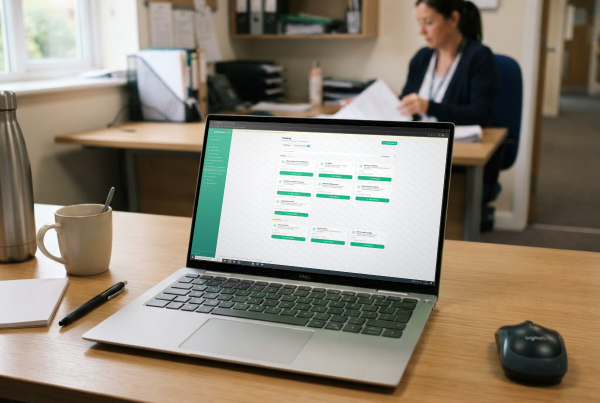
For local authorities, where multiple locations might operate under a single governance framework, the Group Oversight feature is particularly invaluable. It enables leaders to see readiness across all sites side by side, ensuring that every location adheres to the expected standards. This not only provides a clear picture of where improvements are needed but also empowers each site to take ownership of its compliance responsibilities.
Another significant factor in compliance management is the ability to track staff acknowledgments of policies. PolicyNow allows for comprehensive audit trails that timestamp who read each policy, noting the version and the timing of those acknowledgments. This level of accountability is crucial for inspectors looking for evidence of ongoing training and compliance cultural depth. If an inspector were to inquire, ‘How do you know your staff are following safeguarding protocols?’ the answer cannot simply be, ‘We emailed it to everyone.’ Instead, clear, verifiable trails of acknowledgment and version changes, together with proactive re-acknowledgment prompts when policies change, provide concrete evidence to inspectors.
Additionally, with offline access to key policies, staff in remote areas or during emergency situations can still access vital information, ensuring continuity in care regardless of circumstances. They receive essential excerpts, backed with a source reference, allowing them to remain informed under challenging conditions. This ensures that compliance does not falter due to lack of technological support or access.
The incorporation of AI training modules generated right from adopted policies further supports continuous improvement. Staff are not only trained on policy adherence; they can engage in real-world scenarios that challenge them to apply their understanding under pressure. Short comprehension quizzes after training sessions help to assess genuine understanding, feeding back into a compliance score that reflects staff preparedness at any given time.
To sum up, local authorities are tasked with complex oversight functions that require robust compliance frameworks. PolicyNow’s holistic approach—through tailored policy templates, instant access to crucial information, detailed tracking of compliance obligations, offline access to policies, and AI-driven training—gathers all threads into a cohesive strategy for continuous improvement. Each feature strengthens the next, turning policy adherence from a regulatory obligation into a core part of your service ethos.
For local authorities keen on embedding these practices into their day-to-day operations, I invite you to experience first-hand how PolicyNow can support this transformation. Discover the practical solutions tailored to enhance compliance and foster a genuine culture of improvement across your teams at policynow.uk.
Find out how Policy Now can help your organisation →
References & Further Reading
- https://www.local.gov.uk/publications/improvement-and-assurance-framework-local-government
- https://projectdelivery.gov.uk/library-products/continuous-improvement-assessment-framework-html/
- https://www.local.gov.uk/publications/lga-improvement-support-annual-report-202425
- https://assets.publishing.service.gov.uk/media/6396f8ec8fa8f5530c49bf25/LA_Interventions_report_December_2022.pdf
- https://www.food.gov.uk/board-papers/local-authority-performance-update-1
- https://www.local.gov.uk/publications/state-digital-local-government
- https://www.local.gov.uk/publications/analyis-local-authority-cqc-assessment-reports-what-does-good-look