For hospice leaders, governance is a delicate balancing act. You operate under the same rigorous CQC inspection framework as acute providers, yet you are often driven by a charitable mission, complex volunteer networks, and a heavy reliance on specialist end-of-life care standards. The Well-Led key question does not offer special dispensation for the third sector; it demands the same cold, hard evidence of oversight that it demands from a private care group.
#
CQC Inspection Evidence: What the Well-Led Domain Requires
The fundamental challenge for hospices is proving that governance is not just a collection of static documents in a filing cabinet. Under the CQC Single Assessment Framework, inspectors look for ‘active’ assurance. They want to see how you identify risks, how you learn from incidents, and—crucially—how you ensure that your policies are actually being practised on the floor, rather than simply existing as theoretical frameworks.
#
Challenges in Hospice Governance and Regulatory Compliance
Hospices often suffer from the ‘expert-led’ paradox. When your staff are highly skilled clinical professionals, there is a temptation to assume that their internalised knowledge replaces the need for robust, documented governance. This is a common trap. CQC inspectors, however, operate on the principle that if it is not recorded, it did not happen. You must demonstrate that your clinical excellence is underpinned by a systemic, reliable approach to policy management that extends to every volunteer and member of staff.
#
How to Evidence Staff Understanding and Policy Compliance
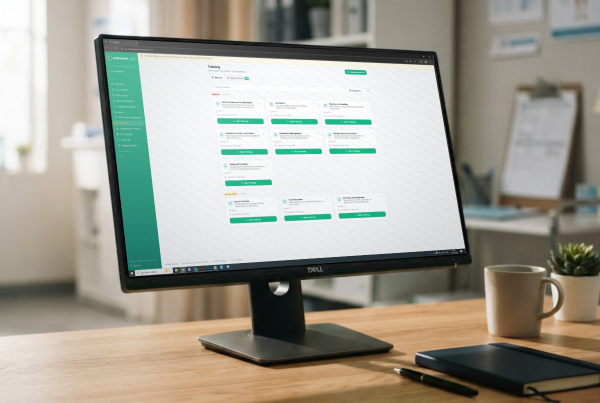
To move from passive policy management to active governance, you need a mechanism that closes the gap between the document and the practitioner. The challenge is ensuring that staff in high-pressure end-of-life environments can engage with guidance without that process becoming a burden. This is where PolicyNow’s Staff Comprehension Quizzes become a vital part of your inspection readiness. By auto-generating short, focused quizzes directly from your own policy content after a staff member acknowledges a document, you create a tangible, timestamped audit trail of genuine understanding. This moves you away from the ‘read-and-forget’ culture that so often fails during CQC well-led interviews.
Furthermore, for an organisation with complex, mission-driven operations, the ability to map every internal procedure to specific CQC Quality Statements provides an objective, live view of your compliance posture. With the Regulatory Mapping feature, you can see exactly where you are covered and, more importantly, where you have gaps before an inspector identifies them for you. This allows you to demonstrate to regulators that your governance is proactive, transparent, and underpinned by continuous, evidence-based improvement.
—
–
Find out how PolicyNow can help your organisation →