
For anyone running community services in England, the struggle is rarely about the quality of the policy itself. It is about the gap between the document that sits in a digital folder or a ring binder and the actions taken by a support worker in someone else’s home. You have clear, evidence-based policies on safeguarding, medication, and lone working. But when an inspector asks you to prove that every staff member has actually engaged with these documents, you are often left pointing at a spreadsheet, a missing sign-off sheet, or a generic email sent six months ago. These are fragile proofs, and in the eyes of the Care Quality Commission, fragility is a liability. Under the Single Assessment Framework, the regulator is looking for evidence that you understand and manage your risks in real-time, not that you can scramble to locate a signature when they walk through the door.
The industry-standard approach—printing sign-off sheets or tracking email acknowledgements—is failing us because it treats policy engagement as a bureaucratic chore rather than a core component of patient safety. We have all seen the reality: a staff member, rushing between visits or managing a complex crisis, scribbles a signature on a shared sheet just to clear a list. There is no proof of comprehension. There is no proof that the person who signed is the person who actually read the policy. In a sector where we must be able to demonstrate that our staff have the right knowledge at the right time, we are relying on a system that is fundamentally untrustworthy.
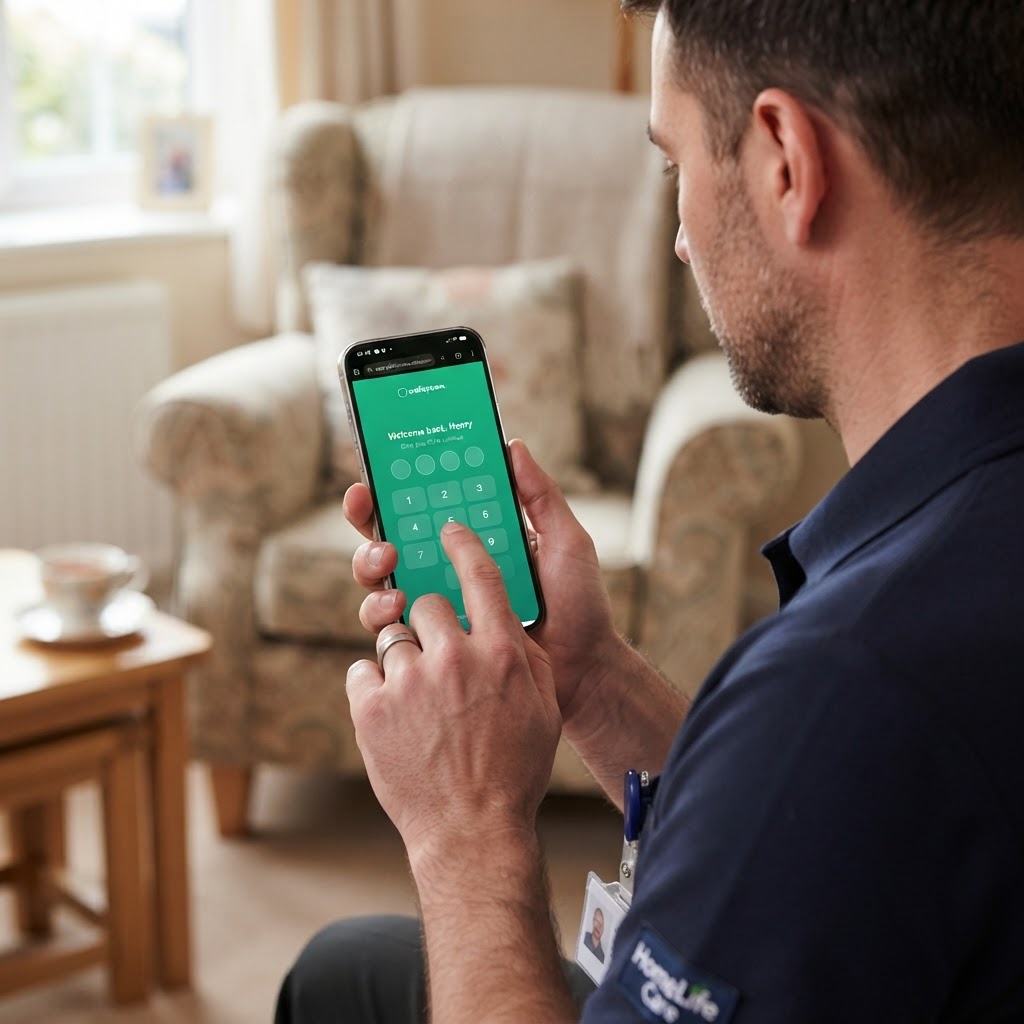
At policynow.uk, we have long argued that you should demonstrate, not explain. If you cannot rely on the integrity of your own records, you are perpetually one inspection away from a finding that suggests a lack of oversight. This is why we have engineered a more robust mechanism for engagement: PIN-Secured Access. This feature was built specifically to remove the ambiguity inherent in shared devices and paper trails. When a staff member accesses a policy on a shared tablet or mobile device, they must confirm their identity with a unique, personal PIN. It transforms the act of policy acknowledgement from a passive, potentially anonymous gesture into a verified, individual commitment.
This is not just about keeping a tidy log. It is about building a culture where evidence is bulletproof because it is anchored to specific individuals. With PIN-Secured Access, every read, every re-acknowledgement, and every confirmation is timestamped and linked to a unique user identity. To prevent misuse, we have standardised this with a five-attempt lockout and a thirty-minute cooling-off period, ensuring that the system remains secure even in the high-pressure environment of community care. It ensures that when your compliance dashboard says a staff member has understood your safeguarding policy, you can be certain that person was who they said they were.
This shift is essential if we want to move toward the goal of being ready before you are asked. When you are managing a dispersed team, you cannot monitor every interaction, but you can build a system that manages those interactions for you. According to Skills for Care’s latest workforce guidance, the stability of a service relies heavily on the quality of induction and continuous learning, yet these foundations are often undermined by poor record-keeping. Similarly, CQC’s regulatory guidance consistently emphasises that providers must have effective systems to ensure staff are competent and understand their responsibilities. By requiring a PIN for policy access, you move away from the guesswork of paper logs and into a world of continuous, trustworthy evidence.
Simplicity is the key to adoption. For the frontline worker, this is not a complex compliance hurdle. It is a quick, familiar interaction that takes seconds, similar to how they might access other mobile applications. The complexity is handled for them in the background. They get the information they need to support their service users, and you get an audit trail that holds up under the scrutiny of an inspection. It is the definition of simple for staff and powerful for leaders. You are no longer managing a chaotic flow of paper; you are overseeing a verified stream of data that demonstrates your commitment to safe, effective care.
This is the difference between hoping your staff are compliant and knowing they are. In an era where governance intelligence is becoming the defining factor in service quality, relying on outdated methods is a risk we can no longer afford to take. You need a system that works quietly in the background, providing you with the assurance that your team is supported, informed, and accountable.
Find out how Policy Now can help your organisation →
References & Further Reading
- https://www.kingsfund.org.uk/insight-and-analysis/reports/staff-engagement-creativity-enthusiasm
- https://www.gov.uk/government/publications/nhs-staff-standards/nhs-staff-standards-detailed-requirements-for-employers
- https://www.applytosupply.digitalmarketplace.service.gov.uk/g-cloud/services/132094149628389
- https://www.security.gov.uk/policy-and-guidance/improving-security-culture/
- https://www.england.nhs.uk/long-read/safety-culture-learning-from-best-practice/
- https://www.skillsforcare.org.uk/news-and-events/blogs/how-leaders-create-workplace-cultures-that-retain-social-care-staff
- https://www.skillsforcare.org.uk/resources/documents/Support-for-leaders-and-managers/Managing-a-service/Workplace-culture/A-positive-culture-toolkit-for-adult-social-care.pdf