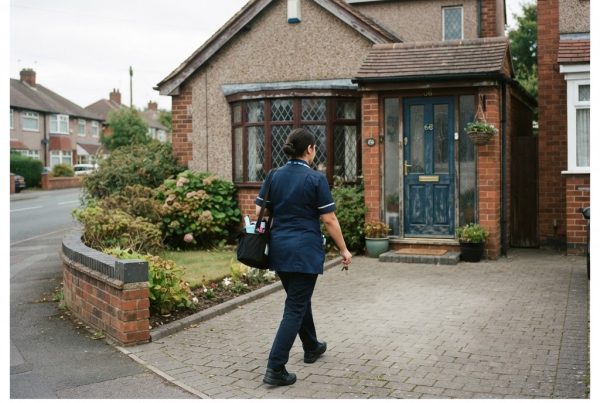

For a care home manager, the evidence of quality is often contained within four walls. You can walk the floors, observe the interactions in a lounge, and see the paper trail in a central office. For the provider of domiciliary care, the service is fundamentally decentralised. Your quality is delivered behind thousands of different front doors, out of sight of your management team for the vast majority of the time.
#
The Fallacy of Centralised Control
When the Care Quality Commission (CQC) assesses a domiciliary care service under the Single Assessment Framework, they are looking for evidence of a culture that persists when no one is watching. Many providers attempt to bridge this gap by increasing the volume of reporting or demanding more frequent check-ins from staff. This is a mistake. More reports do not equate to better oversight; they usually just create a ‘paperwork tax’ that draws experienced carers away from the people they are there to support.
Regulators have become increasingly adept at identifying the difference between a compliant process and a compliant culture. If your evidence pack looks like a curated museum of perfect forms, but your incident reporting shows a lack of depth or reflection, the contradiction is obvious. The goal is not to produce more documentation, but to demonstrate that your policies are living documents that inform real-time decisions in the community.
#
Closing the Proximity Gap
How do you prove that a staff member in a client’s home is following your safeguarding policy, the latest infection control guidance, or specific person-centred care requirements when you are back at the office? You stop trying to police it through retrospection and start providing it through access.
When staff can access exact, policy-based answers in the moment, compliance shifts from an administrative burden into a support tool. By using the Ask PolicyNow feature, a carer working a shift can receive an instant, accurate answer to a complex query directly from your own policy library. This does more than resolve a doubt; it creates a timestamped, auditable record that the guidance was accessed and understood at the point of care. It shifts your evidence from ‘we told them’ to ‘they knew exactly where to find it’.
#
Building Evidence by Design
Effective governance in the domiciliary sector requires moving away from the assumption that you can verify compliance after the fact. Instead, embed the verification into the workflow. If your staff have the tools to be correct the first time, your evidence naturally builds itself through the legitimate use of your systems. In a sector where you are inherently invisible to the centre, the most powerful tool you have is not more oversight, but better-equipped staff.
—
–
Find out how PolicyNow can help your organisation →